Where a hotel offers mass hospitality at a pace set in advance, a suite or boutique apartment gives you private space, quiet and complete flexibility, shaped around you. The choice between them bears directly on your privacy, on how well you rest and on whether the holiday is one of compromises.
When you book a holiday you are not simply buying a room; you are buying a business model. A hotel is, at bottom, a hospitality plant built on industrial lines. It works on mass: hundreds of rooms, a vast dining room and a busy lobby. The aim there is to run a large crowd efficiently.
A complex of suites or boutique apartments is built on exclusivity. The aim is the opposite entirely: to create a private, secluded space in which you feel the whole place was made for you.
The practical difference to your days is enormous. Rather than adapting to the hotel’s pace, the place adapts to yours.
Space of your own: why an enclosed complex beats a busy corridor
The most common complaint from people coming home from a large hotel is an acute lack of privacy. Hotels are built on shared walls and endless corridors, which means you are permanently exposed to noise and to other people’s eyes.
When you choose a fine suite, what you are paying for above all is peace of mind and quiet:
- No tiresome queues at check-in and check-out.
- No noise of doors slamming and children running down the corridor at six in the morning.
- The whole space is yours, so you feel at home, with no forced encounters with strangers on the way to your room.
Real freedom at the water: a pool and jacuzzi without an audience
The water areas of hotels have become, in recent years, a source of crowding and pressure rather than calm. Guests often find themselves reserving a spot first thing in the morning.
At a suite built for indulgence, and particularly one suited to an observant family, this is answered perfectly. The pool and jacuzzi are entirely private, or shared with no more than a handful of units. For anyone it means complete calm; for an observant family it is the ideal answer to questions of modesty, since the complex is closed to any view from outside.
Service shaped around you, rather than a rigid protocol
Hotels run to strict rules: breakfast is served within fixed and narrow hours, the room must be vacated at a precise time, and the service is handled by staff who change from day to day. In a boutique complex that flexibility works in your favour:
- Food on your terms: the meal comes to you, at an hour that suits you, with full regard for what you like to eat and for mehadrin kashrut arranged in advance.
- Properly set up for Shabbat: where a hotel means contending with lighting sensors, digital door locks and Shabbat lifts, in a suite of your own the control is yours. A hotplate, an urn and Shabbat timers for the air conditioning and the lighting can all be arranged beforehand, for a calm Shabbat with nothing to worry about and nothing awkward.
Side by side: what you get for what you spend
| What to compare | A suite or boutique apartment | A hotel |
| Privacy | A private, secluded complex | Shared public areas |
| Space of your own | Generous space, its own courtyard, set apart | A room of roughly 25 sq m |
| Pool and jacuzzi | Entirely private, or shared with a handful of guests | One pool shared by hundreds |
| Noise | Next to none; quiet, and the countryside or the alleyways | High, in the lobby, the dining rooms and the lifts |
| Flexibility of the host | Very high; hours and meals arranged to suit you | Low; the chain’s procedures govern |
| Suitability for Shabbat | Complete and natural: Shabbat timers, a hotplate, privacy | Awkward: sensors, lifts, queues in the dining room |
Who it suits less well
We believe in being straightforward. A suite is the right choice for anyone looking for calm, intimacy and room to breathe. The idea suits you less well if what you are after is:
- Entertainers and organised activity for children: if the aim is to leave the children in a club all day, the large hotels are far better equipped for it.
- Company and the buzz of a crowd: anyone who wants to come down to the lobby in the middle of the night and find a busy bar and the noise of a lively city will prefer a hotel.
What most people do not know: three common mistakes in choosing a suite
To make sure your holiday is the one you had in mind, here are three mistakes people often make when booking, and how to avoid them:
- Relying on wide-angle photographs alone: a professional photographer can turn a small room into a palace. Rather than going by the pictures on the website, always check the actual floor area of the suite and read reviews from real guests on Google Maps for an objective picture.
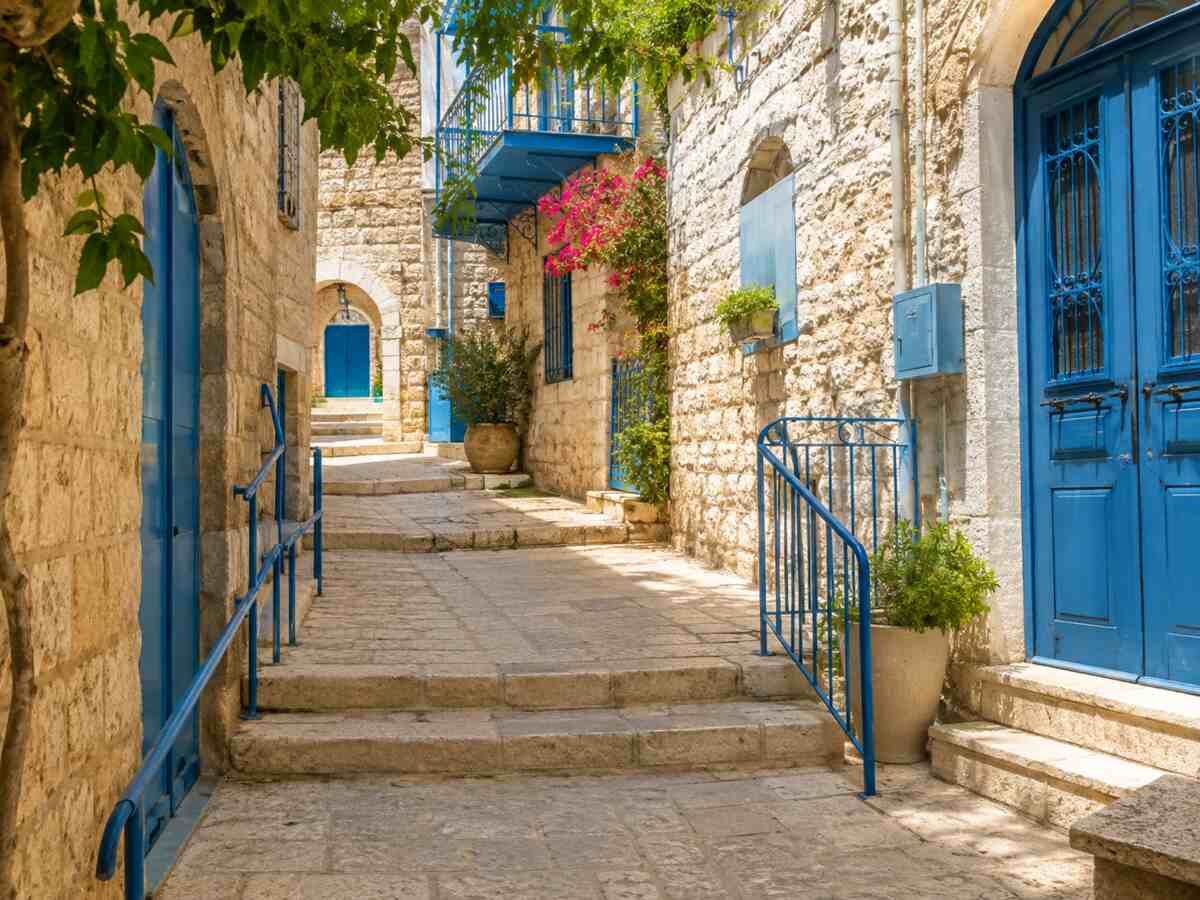
- Overlooking where it actually stands: many assume every suite is deep in the woods. In fact there are wonderful boutique apartments set in historic alleyways, old colonies and picturesque towns. These offer a richer cultural experience, restaurants, and ancient synagogues and galleries within walking distance, with no need to drive for every small thing.
- Not asking what “private pool” means: owners sometimes describe a pool as private when they mean private to the whole complex, which may hold four units. If you need complete privacy, for modesty or for quiet, confirm with the host by telephone beforehand that the pool belongs to your unit alone.
In short: real rest
A holiday is meant to take you out of the pressure of daily life and fill the reserves again. If you are looking for a place where you set the pace, where you can be genuinely at ease, where there is no noise and no crowd, and where any request is answered personally and warmly, a suite or boutique apartment is the most precise choice you can make.
Common questions about the difference between a suite and a hotel
Is a suite or boutique apartment more expensive than a hotel?
Measured by what you get for your money, a suite usually comes out ahead. At a hotel you pay extra for a room with a balcony, for the spa and for parking. In a fine suite the facilities, the space and the privacy are all included in the base price.
How can I make sure a complex is quiet and suitable for an observant family or couple?
Look for complexes with only a few units — up to three — or those that let an extended family take the whole place. A short conversation with the host before booking will tell you exactly how secluded it is and how well the units are separated for sound.
What is the advantage of a suite set among ancient alleyways?
It brings both worlds together: on one hand all the advantages of a suite — quiet, seclusion, architecture with a character of its own — and on the other a short walk to heritage sites, good restaurants, synagogues and places worth seeing, with no long drives on Shabbat or a festival.
What is the main difference in personal service between a hotel and a boutique suite?
It lies in the flexibility. A hotel runs to a strict protocol of breakfast hours and check-out times, handled by staff who change. A boutique suite offers service shaped around you: the hour of a meal, the level of kashrut, and everything needed for Shabbat, all arranged with one host who knows you.